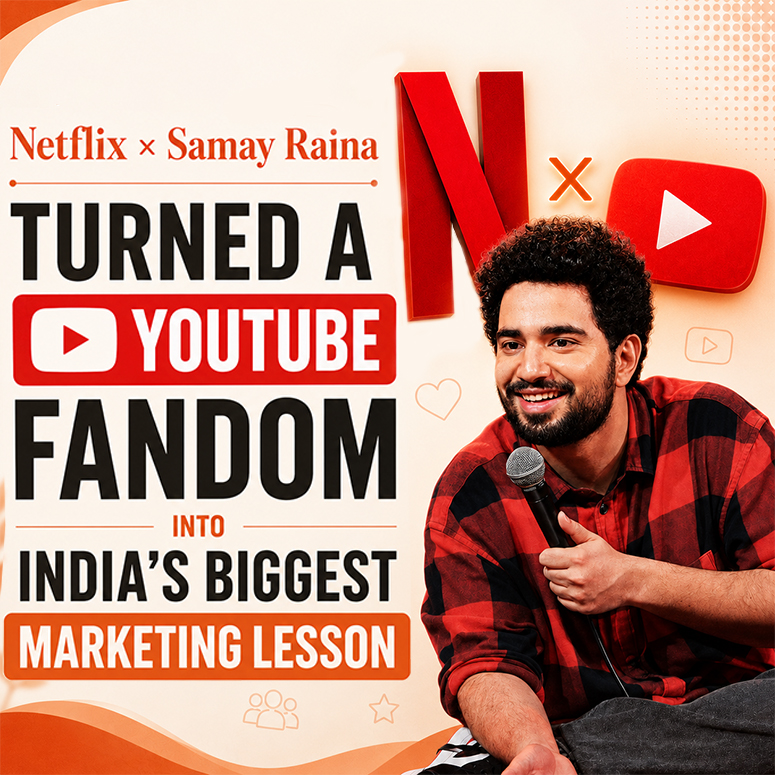
A few years ago, getting featured on Netflix was every creator’s dream. Today, something interesting is happening. A Netflix announcement is being discussed because of a YouTube creator.
Let that sink in.
The conversation around India’s Got Latent Season 2 isn’t just about entertainment. It’s exposing one of the biggest shifts in digital media today—YouTube is no longer competing with OTT platforms. In many cases, it’s shaping them.
And that’s exactly what needs your attention.
The Old Formula: Platforms Created Stars
For years, entertainment followed a simple structure. Television channels created celebrities. Movie studios created stars. OTT platforms launched shows. Audiences followed. The platform had the power.
If Netflix picked a show, people watched it. If a television network promoted a series, it gained attention.
Distribution controlled success. Even today, it’s the same, but the whole debate evolves around should we enjoy India’s Got Latent 2 on Youtube or Netflix.
The New Formula: Creators Bring the Audience
Today, creators are arriving with audiences already built on Youtube, Instagram and other platforms. Samay Raina didn’t need Netflix to become popular, he himself had audience waiting for the next opposite. With huge audience, his clips were already circulating on Instagram. Be it Reddit, memes or any other way of pushing content, you name it and you will find Samia Raina with his one-liners. In other words, the attention existed before the platform entered the picture.
This is a massive change in audience behavior. People are no longer discovering content through platforms.
They’re discovering content through creators.
Why YouTube Feels More Personal Than Netflix
The biggest advantage YouTube creators have isn’t reach. It’s relationship. Audiences don’t just watch creators. They grow with them, they understand their humor, they know their references, and most importantly, they follow their journey.
When viewers watch a Netflix series, they consume content. But when viewers watch creators like Samay Raina, they feel like they’re part of the experience. This emotional connection creates something platforms struggle to create—loyalty. Hence, loyalty wins as compared to reach.
The Attention Economy Has Changed
Traditional entertainment was built around programming. Modern entertainment is built around personalities. Viewers today are less interested in where content lives and more interested in who is creating it. This is why a creator can announce a project and generate millions of impressions without spending heavily on advertising.
The audience follows the person. Not the platform. For marketers, this is perhaps the most important shift of the decade.
Netflix Has Content. YouTube Has Culture.
Netflix can produce world-class content, but the paid subscription makes the audience thing, whether they should opt for it or not. On other hand, YouTube creators often produce something equally powerful—culture, but the problem that persist is Ads.
Drop in where are you watching India’s Got Latent 2.
Think about what happens after an episode of India’s Got Latent. People create memes. Reaction videos appear. Clips get shared. Debates begin. WhatsApp groups discuss moments. Instagram pages repost snippets. The show extends far beyond its original platform.
It becomes internet culture.
And culture travels much faster than advertising.
The Real Question Marketers Should Ask
This isn’t a story about Netflix partnering with Samay Raina. It’s a story about why one of the world’s biggest streaming platforms sees value in creator-led communities. Because communities have become the new distribution channels.
For years, creators chased platforms for visibility. Today, platforms are increasingly looking toward creators for relevance. That’s a significant reversal.
What Brands Can Learn From This Shift?
The biggest lesson isn’t about entertainment. It’s about audience behavior.
Consumers are moving away from polished, one-way communication. They prefer authenticity. They prefer participation. They prefer communities over campaigns. Understanding the shift allows you to win the game.
The brands that continue relying solely on traditional advertising may find themselves competing against creators who understand audiences far better.
Final Thoughts
Netflix vs YouTube is no longer a battle between two platforms. It’s a battle between two models of attention. One is built on content libraries. The other is built on communities. One distributes entertainment, the other creates conversations. And if the buzz around India’s Got Latent Season 2 proves anything, it’s this: The future of entertainment may not belong to the platform with the biggest catalogue. It may belong to the people who own the audience’s attention.